

Could PCOS be contributing to your hair thinning, or might another factor be involved?
Polycystic ovary syndrome (PCOS) is best known for its effects on periods and fertility, but many women are surprised to learn it can also affect their hair. Some notice thinning on the top of the scalp, while at the same time noticing more hair on the face or body. This can feel confusing and, for many, distressing.
PCOS hair loss is a recognised concern, and there are ways to assess and manage it. This guide explains why PCOS may affect hair, what the thinning tends to look like, how it is assessed, and what treatment options a doctor may discuss. It is for general information and cannot tell you what is happening in your own body. That needs a conversation with a doctor.
Summary
- PCOS may be associated with patterned thinning, but it doesn’t confirm the cause of an individual’s hair changes.
- Gradual patterned thinning and sudden or diffuse shedding can point to different possibilities, so note when changes began and how they’ve progressed.
- A clinician can consider your health history, examine the scalp and recommend further investigations when appropriate.
- Medical care, scalp therapies, regenerative options and surgery have different purposes and limitations, and require individual assessment.
- Record changes and gather relevant health history to help guide a doctor-led scalp assessment in Singapore.
What Is PCOS?
PCOS is a common hormonal condition affecting women of reproductive age, and is estimated to affect roughly one in ten. Its causes are not fully understood, but it involves a combination of hormonal and metabolic factors, including raised levels of androgens (sometimes called “male” hormones, although all women produce them in small amounts) and, in many cases, insulin resistance.
Doctors commonly diagnose PCOS when at least two of the following three features are present, after other causes have been ruled out:
- Irregular or absent ovulation, which often shows up as infrequent or missed periods
- Signs of raised androgens, either on examination (such as excess facial or body hair, acne or scalp hair thinning) or on blood tests
- Ovaries that appear polycystic on an ultrasound scan
Not everyone with PCOS has all of these features, and symptoms vary widely between individuals. A diagnosis should always come from a doctor.
How Can PCOS Affect The Hair?
Hair follicles respond to hormones. In people who are genetically sensitive to androgens, higher androgen activity can cause follicles on the scalp to shrink gradually over time, a process called miniaturisation. Affected hairs become shorter, finer and lighter, and the growing phase of each hair gets shorter. Over months and years, this leads to a loss of density.
The same hormones can have the opposite effect elsewhere on the body. In areas such as the chin, upper lip, chest or abdomen, androgens can make fine hair thicker and darker, a feature called hirsutism. This is why PCOS may involve thinning on the scalp and more visible hair elsewhere at the same time.
It is worth noting that not everyone with PCOS develops hair thinning, and the amount of change varies. Genetics, age and overall hormone levels all play a part.
PCOS Hair Thinning: What Does It Look Like?
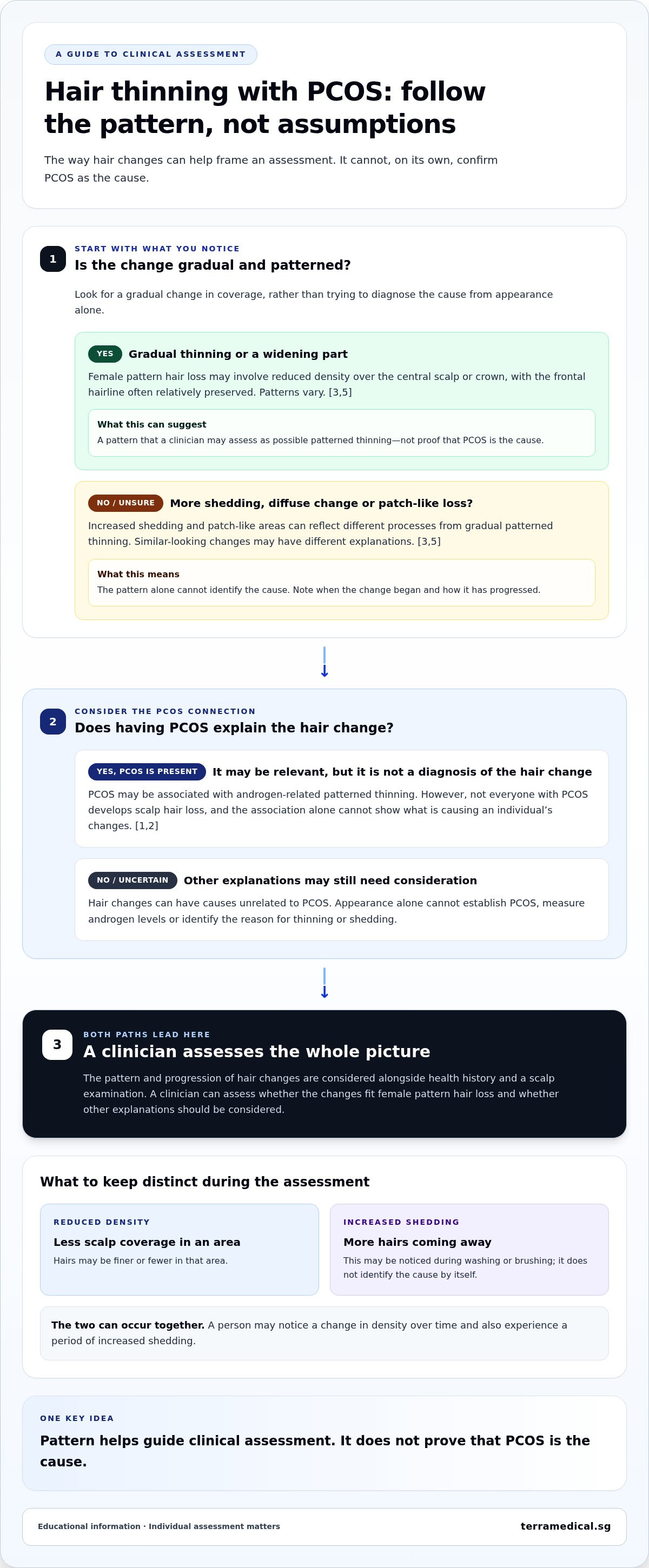
PCOS hair thinning usually follows a pattern similar to female pattern hair loss. Rather than a receding hairline or bald patches, many women notice:
- A wider central parting
- Less density on the top and crown of the scalp
- A more visible scalp under bright light
- A thinner ponytail
- Finer, shorter hairs mixed in with thicker ones
The frontal hairline is often preserved, though a little thinning at the temples can occur. The change is generally gradual, and some women only realise how much has changed when they compare older photos.
This is different from a sudden increase in shedding, which tends to point to a trigger such as illness, stress, a nutritional issue or a medication. In practice, some women have both gradual thinning and bouts of increased shedding.
PCOS Alopecia: Is It The Same As Female Pattern Hair Loss?
The term “PCOS alopecia” is commonly used online, but it is not a separate medical diagnosis. Doctors generally describe hair thinning in PCOS as female pattern hair loss, also called androgenetic alopecia, occurring alongside a hormonal condition.
The two are closely related but not identical. Female pattern hair loss can occur in women who do not have PCOS, and it is also influenced by genetics and age. In a woman with PCOS, raised androgen activity may be one of the factors contributing. This distinction matters, because it means thinning should not be assumed to be due to PCOS alone, and other causes still need to be checked.
Other Causes That Can Look Similar
Since several conditions can cause scalp thinning in women, and some can coexist with PCOS, a doctor will usually consider the wider picture. Possibilities include thyroid conditions, iron deficiency, low vitamin D or vitamin B12, crash dieting or low protein intake, recent childbirth, perimenopause and menopause, and medications that can affect hair. Scalp conditions and autoimmune conditions such as alopecia areata may also be involved.
Women with PCOS can also be affected by iron deficiency, especially if periods are heavy or prolonged. This is one reason a broad assessment is more useful than assuming a single cause.
How Is PCOS Hair Loss Assessed?
Assessment normally begins with a conversation. A doctor may ask about when the thinning began, how quickly it has progressed, your menstrual pattern, other symptoms such as acne or excess hair growth, weight changes, family history, medications and any recent illness or stress.
The next step is usually an examination of the scalp and hair, which may include looking closely at hair thickness and density. This helps tell apart pattern thinning from shedding, patchy loss or scalp problems.
Blood tests are often used to look for contributing factors. Depending on your history, a doctor may consider hormone levels, thyroid function, iron stores (ferritin), vitamin D and B12, and markers of blood sugar. You can read more about how these tests fit into an assessment in this overview of laboratory tests for hair loss. Some tests need to be timed within the menstrual cycle, and certain medications, including hormonal contraceptives, can affect results, so it helps to tell your doctor everything you take.
If PCOS has not yet been formally diagnosed, a doctor may also recommend a pelvic ultrasound or referral to a gynaecologist or endocrinologist for a fuller evaluation.
PCOS Hair Loss Treatment: What Options May Be Discussed?
There is no single approach that suits everyone, and what is appropriate depends on your diagnosis, your health, your plans for pregnancy and your preferences. The general options below are the kinds of things a doctor may talk through. They are not recommendations, and prescription medicines should only be used under medical supervision.
Addressing the Underlying Condition
Managing PCOS itself may be part of the plan. This can include lifestyle measures such as a balanced diet and regular physical activity, which can help insulin sensitivity and overall hormone balance in some women. Where appropriate, doctors may also discuss medicines such as hormonal contraceptives or metformin, which are used for PCOS-related features. How much these help the hair specifically varies and is not guaranteed.
Treatments That Act On Androgens
In some women, a doctor may consider anti-androgen medicines, such as spironolactone, sometimes used for hair thinning even though that is not its main licensed purpose. These medicines are not suitable during pregnancy or when trying to conceive, and they need monitoring. They should never be started without a doctor’s advice.
Topical Treatments
Minoxidil is a topical treatment commonly used for pattern hair loss in women. It can cause scalp irritation in some people, and shedding is sometimes noticed in the early weeks. It is generally used on an ongoing basis, and a doctor can advise whether it is suitable, particularly if you are pregnant or breastfeeding.
Correcting Other Contributors
If tests show low iron, a vitamin deficiency or a thyroid problem, these are managed on their own terms, as part of the overall plan.
Supportive Measures
Gentle hair care, such as avoiding tight hairstyles, excessive heat and harsh chemical treatments, may reduce breakage. Some people also use cosmetic options such as hair fibres or styling adjustments for coverage. These change appearance but do not change the underlying process.
In some cases, a doctor may also discuss procedures or other clinic-based approaches. Whether any of these is suitable depends on the diagnosis and on how much active hair remains, and this is a decision to make after a proper assessment. For individuals seeking supportive aesthetic care for broader hormonal skin and complexion concerns, clinics such as Pellis Medispa offer tailored rejuvenation treatments for the face and body.
PCOS Hair Regrowth: What Can You Realistically Expect?
Many women ask whether PCOS hair regrowth is possible. The honest answer is that it depends, and that hair moves slowly.
Hair grows only about a centimetre a month, and the hair cycle takes time to respond to any change. Doctors usually judge whether a plan is working over many months, often six to twelve months or longer, rather than weeks. Early changes may be subtle, such as less shedding or finer hairs becoming slightly thicker, and they can be difficult to see day to day. Progress is sometimes tracked with photographs taken under the same conditions.
Some points are worth keeping in mind:
- Treatment for pattern hair loss is generally aimed at slowing further loss and, in some people, improving density, not at restoring hair to how it was before.
- If a treatment is stopped, hair loss may continue or return.
- Results vary between individuals, and some people see little change.
- Where thinning is advanced and follicles have shrunk significantly, response may be more limited.
For this reason, it is usually advisable to seek assessment relatively early, rather than waiting until thinning is advanced.
Living With PCOS Hair Thinning
Hair changes can affect confidence and emotional wellbeing, and PCOS itself is associated with higher rates of anxiety and low mood. If you feel distressed, it is reasonable to mention this to your doctor. Support from a counsellor, a support group or people you trust can also help, while private clinics such as Ready Health can provide prompt consultations and medical evidence if symptoms interfere with your ability to work.
A few general habits may be useful while you work out a plan. Eating regular, balanced meals, staying active, sleeping well and managing stress support overall health. Being cautious with supplements is wise, since products marketed for hair vary in quality, some contain very high doses, and biotin can interfere with certain blood tests. It is best to check with a doctor or pharmacist before starting any.
When To See A Doctor
Consider a medical assessment if you notice:
- Gradual thinning on the top of the scalp or a widening parting
- Irregular or missed periods alongside hair changes
- New or increasing hair on the face or body, or persistent acne
- Shedding that has continued for more than a few months
- Bald patches, or an itchy, painful or inflamed scalp
- Hair changes that are affecting your wellbeing
You can discuss scalp thinning with a doctor at a consultation, which usually involves reviewing your history, examining your scalp and, where appropriate, arranging blood tests. The aim is to understand what may be contributing and to explain the options, which sometimes include doing nothing at all. If you would like to talk through your own situation, the doctors at Terra Medical Clinic can go through it with you.
Your Next Steps for PCOS-Related Hair Loss in Singapore
Uncertainty about the cause can make hair changes feel harder to manage. A practical next step is to document what you’ve noticed, gather relevant health information and arrange a clinical assessment. This helps shift the focus from guessing whether PCOS is responsible to understanding the scalp pattern and what may need further evaluation.
Before your appointment, note when thinning began, whether it has changed gradually or more suddenly, and which areas seem affected. If you’ve noticed increased shedding as well as reduced density, record that too. Photos taken over time in similar lighting may help you describe changes, though they can’t diagnose the cause.
Bring relevant information about your PCOS history, any treatment you’re receiving, and changes to medicines or supplements. Mention other health changes that may help the clinician understand the timeline. If you’re taking prescribed treatment, don’t stop or start it without medical guidance. A clear account of what changed and when can support the consultation, but it isn’t a substitute for examination.
Terra Medical offers doctor-led scalp diagnostics, including digital scalp analysis, to examine the scalp and assess the pattern of hair changes. For female pattern hair loss, the Ludwig Scale can be used to describe the degree and distribution of thinning. These assessment tools help characterise what is visible, but they can’t confirm PCOS or establish an endocrine diagnosis on their own.
Taking these steps can make a discussion about PCOS hair loss more focused, without assuming the diagnosis explains every change. For a doctor-led review of your scalp and hair-loss pattern, you can arrange a consultation with Terra Medical at your own pace.
Frequently Asked Questions
Can PCOS cause hair loss?
It may contribute. Raised androgen activity can lead to gradual thinning on the scalp in women who are sensitive to it. Not everyone with PCOS develops hair loss, and other causes should also be checked.
Why do I have thinning hair on my head but more hair on my face?
Both can be linked to androgens. They affect follicles in different areas differently, shrinking some on the scalp while thickening hair in other areas such as the chin or upper lip.
Is PCOS hair loss permanent?
Pattern thinning is generally a long-term condition that tends to progress without management. Shedding triggered by other factors, such as low iron, is often temporary. A doctor can help work out which applies to you.
Do I need blood tests for PCOS hair thinning?
Often, yes. Tests help check for other contributing factors such as thyroid problems or low iron, and a doctor decides which are appropriate for you.